Our Partners



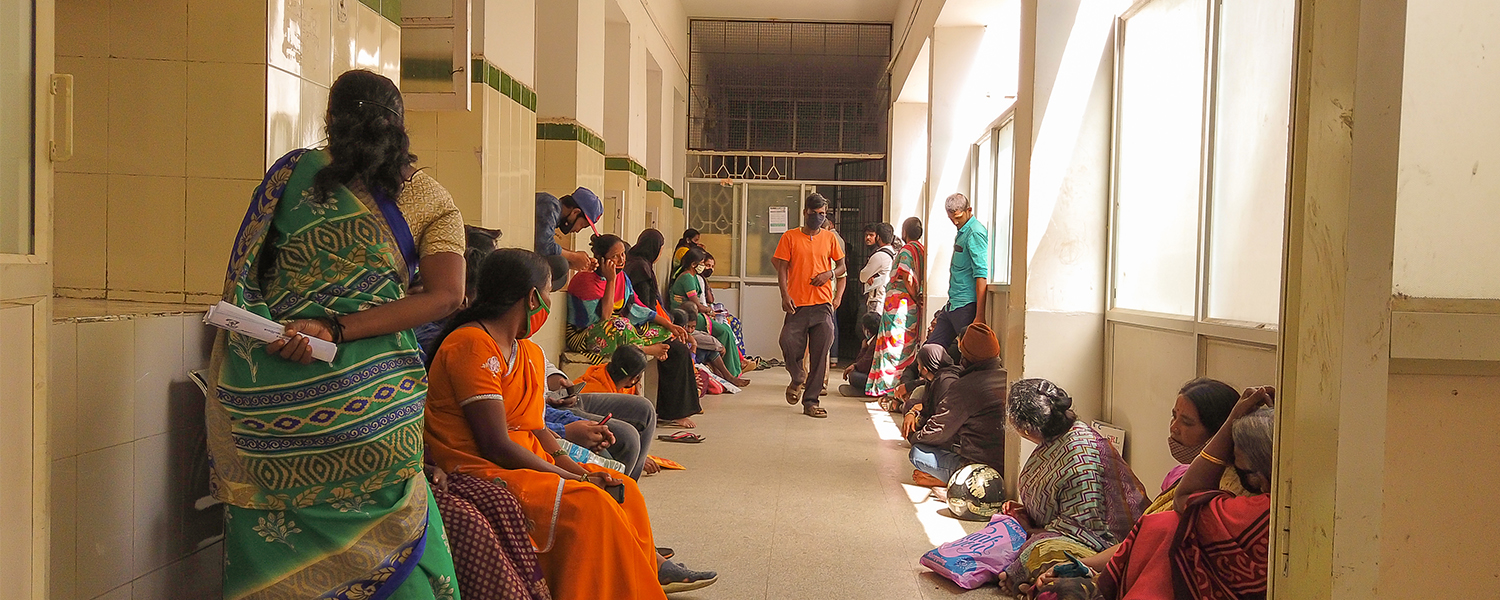


The NIHR Global Health Research Centre for Multiple Long-Term Conditions (MLTC) aims to make a meaningful difference in the lives of those experiencing MLTC. It is a five-year research-driven partnership between institutions in the United Kingdom, India and Nepal, funded by the National Institute for Health and Care Research (NIHR). The research centre is co-led by the Centre for Chronic Disease Control and the University of Leicester in partnership with the All India Institute for Medical Sciences (AIIMS)- Jodhpur, Health Related Information Dissemination Amongst Youth (HRIDAY)- New Delhi and Kathmandu Medical College (KMC)- Nepal and other collaborators.
The term ‘multiple long-term conditions’ refer to the existence of two or more long-term conditions in a single individual. NIHR uses the term to define the co-existence of two or more chronic conditions, each one of which is either:

A physical non-communicable disease of long duration, such as cardiovascular disease or cancer.

A mental health condition of long duration, such as a mood disorder or dementia.

An infectious disease of long duration such as HIV or hepatitis C.
The usage of the term MLTC recognizes that the public and patients don’t understand, or like the term multimorbidity and don’t consider themselves to be multi- morbid. The shift towards usage of the term MLTC acknowledges the negative connotation attached to the term multimorbidity and tries to change the perspective around chronic diseases.
The life expectancy of people across the globe has increased gradually yet considerably. As a result, people suffer more from long-term illnesses that stay with them for life compared to short-term infectious diseases. Long- term illnesses could be heart and lung diseases, high blood pressure, diabetes, or mental health conditions.
These are illnesses or conditions that cannot be cured but can be managed effectively through appropriate treatment (medication and/or lifestyle changes).
International organizations like Medical Research Council, World Health Organization and Global Alliance for Chronic Diseases recognize MLTC as a public health priority. The burden of MLTC is increasing across the globe, in India and Nepal the prevalence is at 10% ( 60 years) and 14% (>60 years) respectively. Both countries do not currently address MLTC holistically. Hence, there is an urgent need to develop and implement new context-specific, patient-centred, equitable, resource-sensitive, integrated management strategies with a continuum of care approach.
Our aim at the Centre is to improve the care for people suffering from MLTC through innovative health system level interventions in both countries. We will do this by meaningfully engaging patients, their communities, and other relevant stakeholders. We will use their views to co-design a person or patient-centered care model that works for them and will train healthcare workers accordingly.
Thus, this NIHR initiative provides an opportune moment to develop, implement and evaluate the concept of responsive patient-centred MLTC care in India and Nepal through large system health system transformation.
The NIHR Global Health Research Centre for Multiple Long-Term Conditions (MLTC) aims to make a meaningful difference in the lives of those experiencing MLTC. It is a five-year research-driven partnership between institutions in the United Kingdom, India and Nepal, funded by the National Institute for Health and Care Research (NIHR). The Centre is co-led by the Public Health Foundation of India and the University of Leicester in partnership with the All India Institute for Medical Sciences, Jodhpur; Health Related Information Dissemination Amongst Youth, New Delhi; Kathmandu Medical College, Nepal (co-applicant institutions) and other partners.
Despite its growing burden, MLTC have received minimal recognition from healthcare providers and policymakers. Health systems are still focused on individual disease management rather than having an integrated care model, resulting in the delivery of fragmented and inefficient care.
The Centre will strengthen research capacities and ecosystems of the co-applicant institutions and undertake extensive community engagement and involvement, and knowledge exchange interventions. This meaningful engagement with patients, caregivers, healthcare providers, communities, and relevant stakeholders at every stage of research will enhance ‘mutual learning’ to effectively address MLTC in both countries and beyond.