
Our Community Engagement and Involvement activities are designed to empower patients with Multiple Long-Term Conditions (MLTC). Through these activities, we aim to create a robust network of empowered patients and community leaders dedicated to improving MLTC care. The aim of the Centre is to empower patients with MLTC to better manage their conditions and access the best available care.
Our initiative provides them with the knowledge, resources, and support needed to take control of their health and improve their quality of life. The Centre will identify and train 30 Community Champions who will be equipped with the skills and knowledge to lead community engagement efforts and advocate for better MLTC care. In addition, we will build the capacity of community members to meaningfully and effectively contribute to the Centre’s activities. They will also be involved in communicating research outcomes to decision-makers through high-level engagements and events. The Centre will create a dynamic, patient-led advocacy group, dedicated to improving MLTC care.
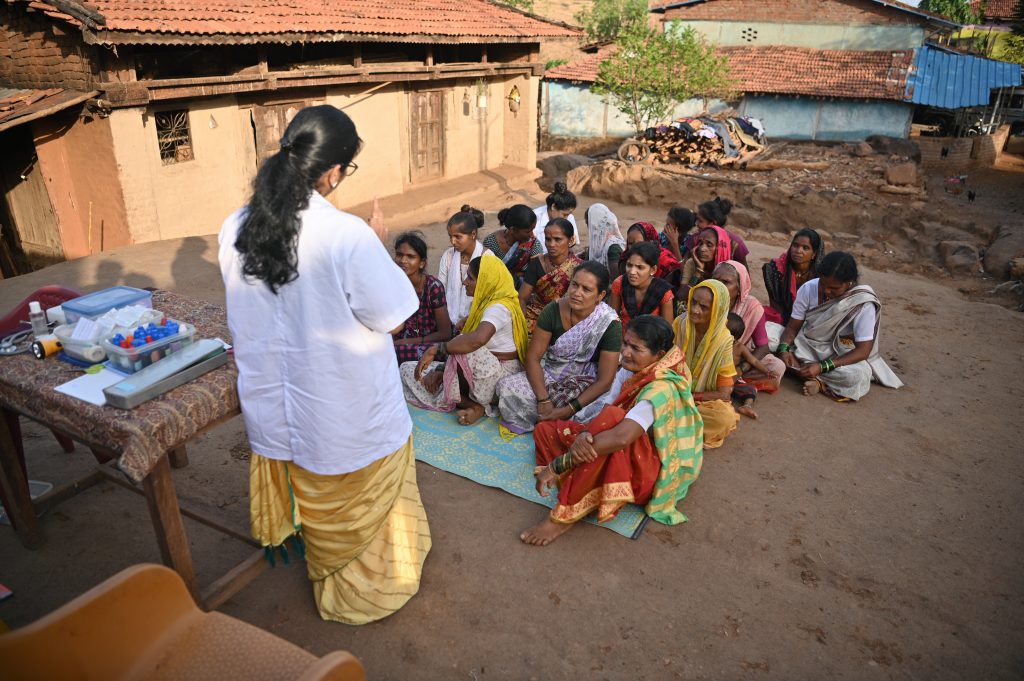
These advocates will then play a crucial role in influencing healthcare policies and practices, ensuring that patient voices are heard, and their needs are addressed. We will foster vibrant regional MLTC patient networks through mutual learning and sharing. These networks provide a platform for patients to connect, share experiences, and support each other, creating a sense of community and solidarity.
The NIHR Global Health Research Centre for Multiple Long-Term Conditions (MLTC) aims to make a meaningful difference in the lives of those experiencing MLTC. It is a five-year research-driven partnership between institutions in the United Kingdom, India and Nepal, funded by the National Institute for Health and Care Research (NIHR). The Centre is co-led by the Public Health Foundation of India and the University of Leicester in partnership with the All India Institute for Medical Sciences, Jodhpur; Health Related Information Dissemination Amongst Youth, New Delhi; Kathmandu Medical College, Nepal (co-applicant institutions) and other partners.
Despite its growing burden, MLTC have received minimal recognition from healthcare providers and policymakers. Health systems are still focused on individual disease management rather than having an integrated care model, resulting in the delivery of fragmented and inefficient care.
The Centre will strengthen research capacities and ecosystems of the co-applicant institutions and undertake extensive community engagement and involvement, and knowledge exchange interventions. This meaningful engagement with patients, caregivers, healthcare providers, communities, and relevant stakeholders at every stage of research will enhance ‘mutual learning’ to effectively address MLTC in both countries and beyond.